Coming Back to Morning Pages Brought Me Back to Life
Writing lemons into lemonade, one blog, book, and poem at a time.
How writing helped me find my own voice again after Mormon deconstruction
For years, before Mormon deconstruction came barreling through my life like a wrecking ball nobody invited,…
How writing helped me find my own voice again after Mormon deconstruction
For years, before Mormon deconstruction came barreling through my life like a wrecking ball nobody invited, I wrote Morning Pages.
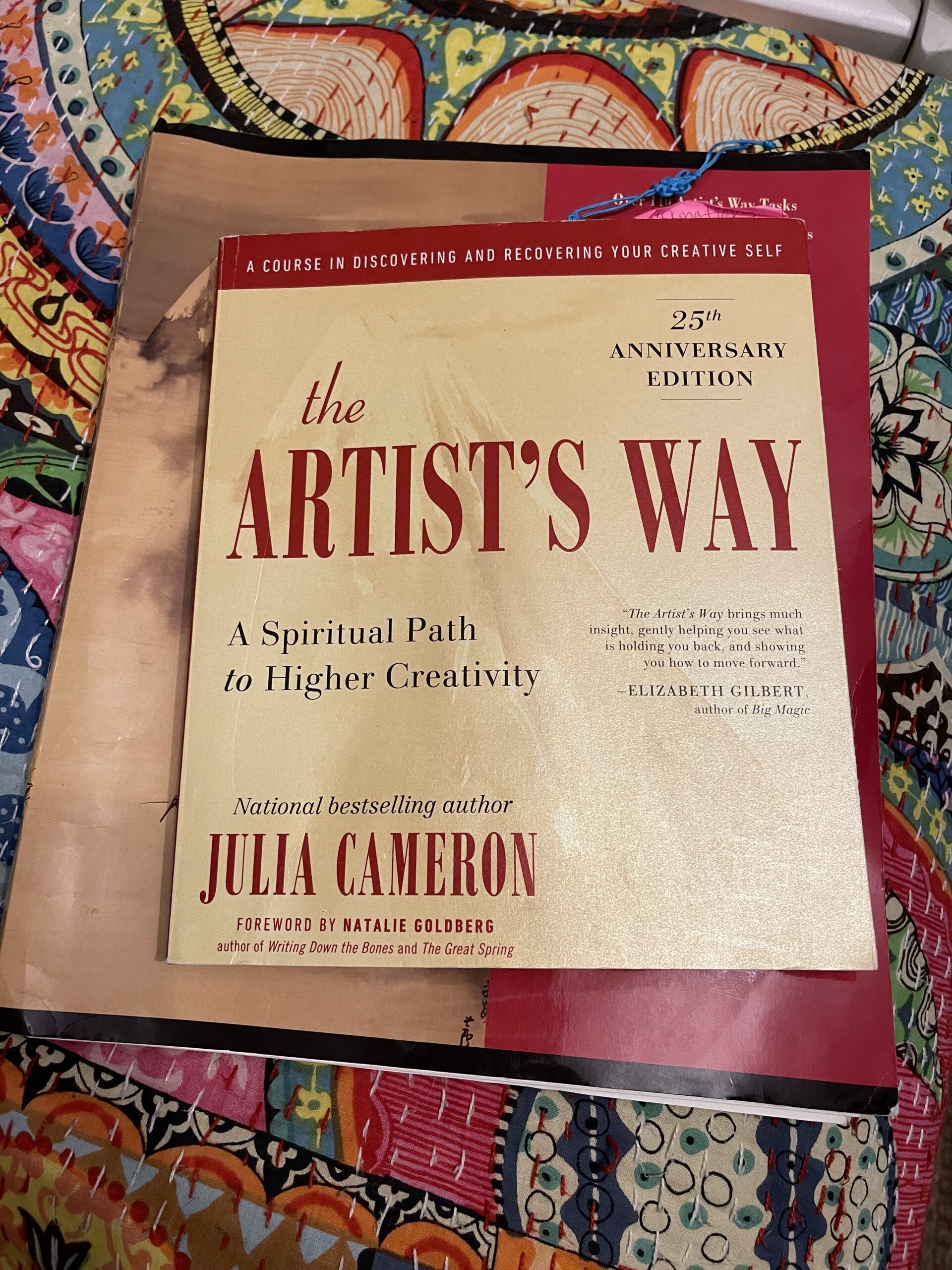
If you haven’t met my hero Julia Cameron yet, allow me the pleasure.
Morning Pages are one of the foundational practices Cameron introduced in The Artist’s Way: three handwritten pages of stream-of-consciousness writing, preferably first thing in the morning. No editing. No performing. No worrying whether you’re profound, eloquent, spiritual, productive, grateful, positive, or even remotely sane.
You just write.
Cameron describes them simply: “Morning pages map our own interior.”
That is exactly what they did for me.
For years, I filled notebooks. Morning Pages gave all the clutter in my head somewhere to go. Anger could be angry. Fear could be afraid. Petty could be spectacularly petty. I didn’t have to make any of it inspirational before breakfast.
And then I started deconstructing Mormonism.
And, like nearly everything else that had belonged to my previous life, I stopped writing.
When Your Entire Worldview Develops a Crack
I did not want to deconstruct.
I think that gets lost sometimes when people talk about religious deconstruction as though somebody woke up on a Tuesday and thought, You know what sounds fun? Blowing up my entire understanding of God, family, eternity, morality, identity, marriage, motherhood and the meaning of life.
Oh, hell no — That was not my experience.
When a religion has supplied the framework through which you have understood nearly fifty years of your life, discovering serious cracks in that framework doesn’t feel intellectually interesting. It feels like unbearable, traumatic, soul-crushing loss.
So I did what many newly deconstructing Mormons do.
I researched.
And researched.
And researched some more.
All the while, expecting, hoping, pleading, desperately and deeply wishing I would find the evidence that this new found doubt of mine was so wrong.
I spent hours listening to the Mormon Stories Podcast. I disappeared down the Floodlit.org rabbit hole. I read documented church history–the kind the church has had for years, but has kept buried out of (easy to find) sight. I examined SEC filings. Spending. And the ACTUAL “generosity” of the church, versus the investments of the church.
I have never simultaneously sobbed, and shouted “what the actual f&#*???” so many times in my life.
There is a stage of deconstruction where you become almost desperate to find proof that you’re NOW wrong. But instead, one new fact explains another discrepancy, which opens another door, which reveals another hallway, and suddenly it’s 1:17 in the morning and you’re still listening to John Dehlin episodes from over a decade ago, because perhaps you’ll find the hole in his conclusions back when he too was just hoping to help change culture, and toxic policies — not deconstruct — and then the entire universe will settle back into place, and you can go back to to the pews, where you thought eternal life lived.
But the only proof of truth that came lead me closer and closer to having my names removed from the records of the church.
The “wrong” kind of proof accumulated while grief accumulated right alongside it.
While I was learning an enormous amount about the institution I had trusted, I was learning considerably less and less about what was happening inside me.
And that distinction matters.
Because while research can tell you the truth about things — it cannot tell you what to do with that truth, or how to make it make sense, or how to suddenly stop living life for the “eternal perspective” you clung to so deeply.
Then Someone Said, Essentially, “Me Too”
Months into that flood of realization, a friend stopped by.
We started talking about her sister’s divorce from a Mormon man who had abused at least one of their children. That conversation wandered into Mormonism, relationships, expectations, the “gospel,” and the things we had each begun seeing differently.
And then something happened that I hadn’t realized how desperately I needed.
A giant me too.
Not the hashtag. Not a debate. Not someone trying to bear a testimony at me, rescue me, correct me, warn me about “anti-Mormon material,” or lovingly suggest that perhaps I simply needed to pray harder.
Just another woman saying, in effect:
I know.
I’ve seen it too.
You’re not imagining how complicated this is.
After months of largely solitary grieving, I cannot adequately describe how good that felt. There are certain kinds of grief that become even heavier when nobody around you understands why you’re grieving in the first place.
Religious deconstruction can be like that.
You may still be surrounded by people you love. You may live in the same house, drive the same streets, attend the same family dinners and shop at the same grocery store. But suddenly you are speaking a language very few people around you are willing—or able—to hear.
That conversation with my friend reminded me of something I had known before my world got so loud:
We need places where we can tell the truth.
And for me, one of those places has always been the page.
I Came Back to the Page
Eventually, I found my way back to Morning Pages. Not because I had solved Mormonism—good hell, we’d still be here—but because I finally realized I needed somewhere to put everything Mormonism had stirred up inside me.
There was anger, of course. There was embarrassment and grief over things I had once taught, defended, accepted, or tolerated because I believed they were good and righteous. There were questions I couldn’t answer and others I was beginning to suspect had never had satisfactory answers in the first place. There was tenderness, too, because deconstruction is complicated like that. I could still love pieces of my old faith while feeling furious about others. I could miss people, traditions, certainty, and belonging without wanting to go back to believing what I had once believed.
That may be one of the cruelest parts of deconstruction: feelings refuse to line up neatly and behave themselves.
You can be furious and heartbroken at the same time. You can feel relieved to finally understand something and terrified by what that understanding changes. You can be absolutely certain that you no longer believe one thing while having no earthly idea what you believe instead. You can deeply miss the woman you used to be while knowing there is no way—and perhaps no desire—to become her again.
For a long time, I think I was trying to resolve all of those contradictions in my head. I wanted to understand them, categorize them, research them into submission. Morning Pages asked something entirely different of me. They didn’t require me to resolve anything. They simply gave me a place where I could tell the truth about what was there.
So I wrote.
Some mornings I wrote about church history. Other mornings I wrote about motherhood, relationships, anger, money, fear, or something completely ridiculous that had annoyed me the day before. Sometimes the pages were thoughtful. Sometimes they were repetitive. Sometimes I sounded wise, and sometimes I sounded like a woman who desperately needed coffee and considerably fewer opinions before 8:00 a.m.
But underneath all of it, something important was happening.
I was beginning to hear myself again.
For nearly fifty years, there had been so many voices explaining what a good woman should be. What a righteous woman should want. What a faithful mother should sacrifice. What forgiveness should look like. What questions were appropriate to ask and which answers I was expected to accept. Those messages had been repeated so often—and for so long—that separating them from my own thoughts was much harder than simply deciding I no longer believed certain doctrines.
Writing gave me a place to start untangling them.
On those pages, I could ask questions without immediately correcting myself. I could admit that something hurt without rushing to make it spiritually meaningful. I could be angry without turning that anger into a character flaw. I could examine an experience and ask, What actually happened here? What was I told it meant? And what do I think it means now?
Those are three very different questions.
Learning to separate them has changed my life.
The page became one of the first places where I didn’t have to perform certainty, righteousness, forgiveness, gratitude, or even healing. I didn’t have to package the story into something inspirational. I could simply tell the truth long enough to discover what I actually thought.
And slowly, underneath decades of expectations, teachings, roles, rules, and other people’s interpretations of what my life was supposed to mean, I began recognizing a voice I had known once and nearly lost.
Mine.
Writing Doesn’t Magically Fix Trauma. But It Can Give the Mind Somewhere to Put It.
I need to make an important distinction here because the internet loves turning complicated research into inspirational refrigerator magnets.
Writing is not magic.
It is not therapy in notebook form, and it isn’t a replacement for professional mental-health care when that care is needed.
The research on expressive writing is also more nuanced than the breathless claims we sometimes see online. Studies don’t show that every person who journals will magically heal her trauma, lower every stress hormone, manifest a cottage in Scotland and emerge emotionally enlightened by Thursday.
Shame. I would absolutely buy that notebook.
What researchers have found is genuinely interesting.
In randomized studies, expressive writing has been associated with reductions in intrusive thinking and improvements in available working-memory capacity. Researchers have suggested that when fewer cognitive resources are tied up repeatedly suppressing or circling stressful thoughts, more mental bandwidth may become available for everything else.
A small clinical study involving adults who had experienced trauma or significant upheaval found that participants completing a six-week writing program showed improvements in resilience along with decreases in perceived stress, depressive symptoms and rumination. The researchers were appropriately cautious—the study was small and observational, so it wasn’t proof that writing caused every improvement—but the results were promising enough to warrant larger trials.
A larger meta-analysis published in 2023 found a small but statistically significant overall benefit of expressive writing for depression, anxiety and stress symptoms across 31 experimental studies with more than 4,000 participants. Other reviews have reached more mixed conclusions, particularly when researchers look across very different populations and types of writing interventions. In other words: the science does not support “writing heals everybody.” It does support continuing to take therapeutic and expressive writing seriously.
And that tracks with my experience.
Writing did not erase what happened.
It helped me stop carrying all of it as one giant, undifferentiated emotional boulder.
On paper, I could begin separating:
What happened?
from
What was I told it meant?
from
What do I believe about it now?
Those are very different questions.
That separation has changed my life.
And Then There Is the Power of Other Women
The second piece of this story is community.
Research on women’s social relationships has found substantial associations between strong social ties, support, stress regulation and psychological well-being. Researchers studying the “tend-and-befriend” response have examined how affiliation and supportive connection can help moderate women’s physiological and psychological responses to stress.
There is an important caution buried in that research too: talking endlessly about problems can sometimes turn into co-rumination—replaying pain together without actually moving through it—and that has been associated with increased anxiety and depressive symptoms in some studies.
That distinction fascinates me.
Because community isn’t valuable simply because women sit around talking about terrible things that happened to us.
The magic—if I may use a scientifically unauthorized word—is what happens when we feel safe enough to tell the truth and then begin making meaning from it.
That conversation with my friend did something months of solitary research had not.
She witnessed me.
And I witnessed her.
There is enormous power in somebody looking at the part of your story you thought nobody could understand and saying:
Me too.
Not stay angry forever.
Not let’s spend the next decade circling the drain together.
Just:
I see it.
I know why that hurt.
Now what are you going to do with it?
“The Pages Lead Us Out of Despair”
Julia Cameron writes that “the pages lead us out of despair and into undreamed-of solutions.”
I have always loved that line, but I understand it differently now than I did when Morning Pages were simply part of my creative routine. Back then, I thought of “solutions” as ideas: clarity about a project, a decision I needed to make, a creative block I needed to work through. During deconstruction, the stakes became much bigger. I wasn’t trying to figure out what to write next. I was trying to figure out what I believed, who I was without the certainty I had relied on for most of my life, and what on earth I was supposed to build from the pieces.
Morning Pages did not hand me those answers. They did something more useful: they gave me enough quiet to begin hearing the questions that actually mattered.
At first, much of what I wrote was about what had fallen apart. That makes sense. Grief wants witnesses, even if the first witness is a spiral-bound notebook on your kitchen table. I wrote about the things I was discovering, the things I wished I could undiscover, and the ways those discoveries forced me to reexamine experiences from years—even decades—earlier. I wrote about anger, loss, relationships, motherhood, church, and the strange disorientation of realizing that some of the ideas I had used to interpret my entire life no longer made sense to me.
But somewhere along the way, the subject of the pages began to change.
I started writing less about the life I had lost and more about the life I wanted.
What would I build if I stopped organizing my choices around what I was supposed to want? What kind of work mattered to me now? What did I want my daughters to see when they watched me rebuild? What could I create from everything I had learned—not just about Mormonism, but about women, power, silence, resilience, and the stories we tell ourselves when we’re trying to survive?
Those questions eventually began turning into things.
A business. Books. Work centered on women. A desire to create spaces where women could say the difficult thing out loud without immediately being corrected, managed, rescued, or handed a prettier interpretation of their own experience.
And eventually, Lemons to Lemonade.
The idea did not arrive fully formed one magical morning between pages two and three. It grew slowly from something I kept returning to: What would have helped me when I was drowning in all of this?
I kept thinking about that conversation with my friend and the enormous relief of realizing someone else understood. I kept thinking about how much writing had helped me separate what happened from what I had been taught it meant. And I kept wondering what might happen if women going through painful faith changes had access to both of those things at once: the privacy of the page and the companionship of women who genuinely understood why the story was so complicated.
Not a place to spend three months proving Mormonism wrong. The internet has that assignment thoroughly covered.
A place to choose one meaningful part of your own experience and write your way through it.
What happened? What did you believe about it then? What were you taught to believe about it? What does it look like from where you stand now? Where are you angry? Where are you grieving? What are you still carrying that perhaps never belonged to you in the first place?
And eventually: What do you want to do with the story now?
Because I no longer believe the hardest things that happen to us have to remain one enormous, tangled mass inside our bodies and brains. Sometimes writing lets us take the mess apart slowly enough to see what is actually there. We can put an experience on paper, examine it, question it, grieve it, occasionally laugh at the absurdity of it, and decide which pieces still deserve space in the life we’re building.
That doesn’t make the lemons sweet.
Some things were painful. Some things were unfair. Some things should never have happened, and I’m not interested in slapping a cheerful life lesson over them and calling it healing.
But we can decide what happens next.
That is what Morning Pages eventually became for me. They did not return me to the woman I had been before deconstruction, and I am deeply grateful for that. Instead, page by page, they helped me begin imagining a life that belonged more fully to me.
Julia was right. The pages did lead me somewhere I could not have imagined when I was deep in the despair of realizing how much of my old world was changing.
They didn’t lead me backward.
They led me home to me.
Nerd Out With Me
If you’re the kind of woman who hears “research suggests…” and immediately wants the footnotes—hello, we should probably be friends—here are some of the sources behind this article:
Julia Cameron on Morning Pages: Cameron defines Morning Pages as three pages of longhand, stream-of-consciousness morning writing and describes them as a foundational tool for creativity and personal growth.
Expressive writing, trauma and resilience: A six-week clinical feasibility study found improvements in resilience and decreases in stress, depressive symptoms and rumination among participants, while emphasizing the need for larger controlled studies.
Writing, intrusive thoughts and working memory: Experimental research found that expressive writing about stressful experiences was associated with reduced intrusive thinking and improvements in working-memory capacity.
Expressive writing and emotional distress: A 2023 meta-analysis of 31 experimental studies found a small overall reduction in depression, anxiety and stress symptoms, while the wider research literature remains mixed.
Women, friendship and stress: A research review examines the role of women’s social ties, self-disclosure, social support and the tend-and-befriend response in physical and psychological well-being.
